



Meghalaya |10 October 2026
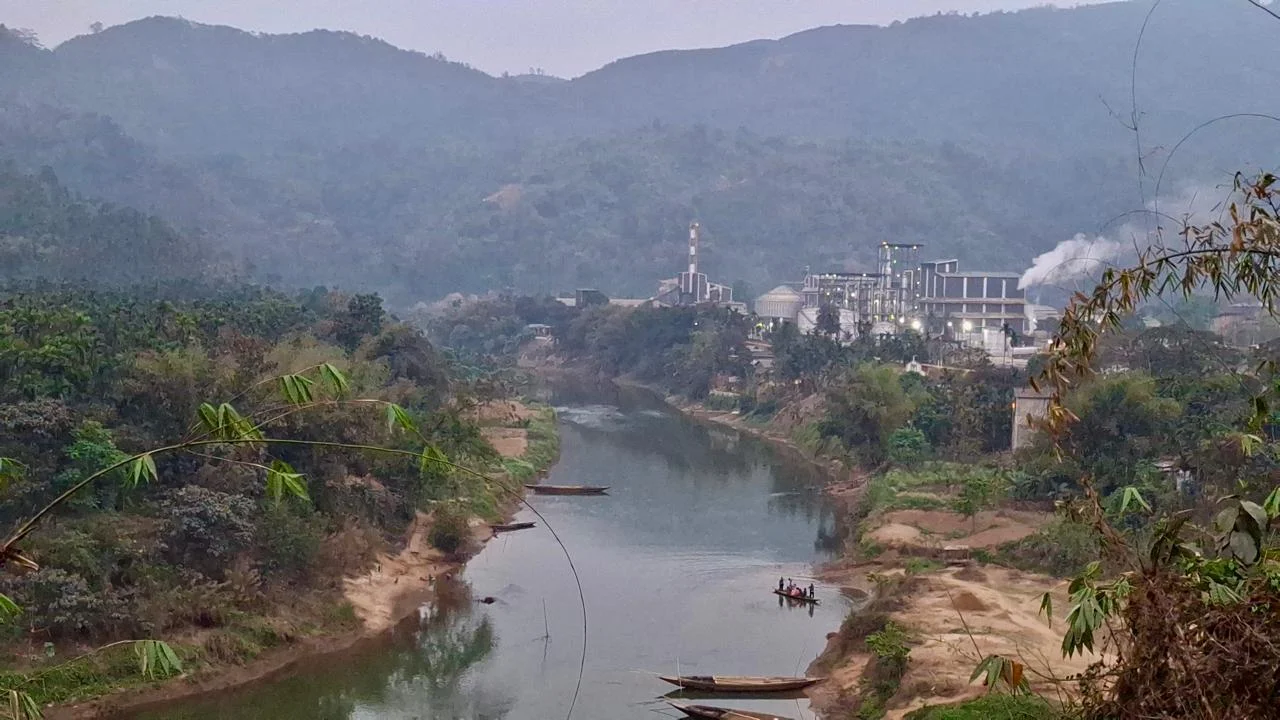
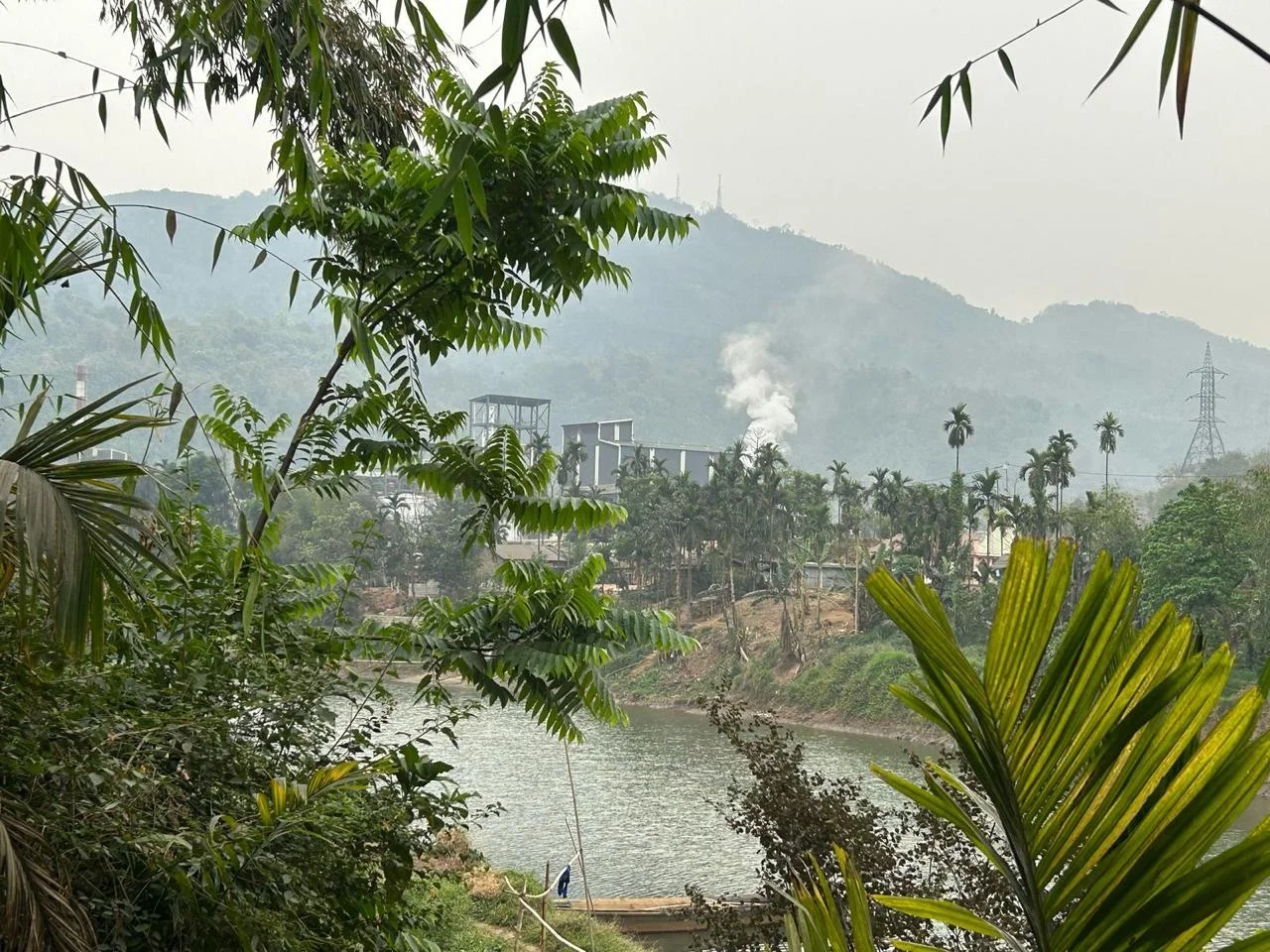
Byrnihat, an industrial hub straddling the Meghalaya–Assam border, has become the centre of a legal battle over industrial pollution and the enforcement of environmental laws in northeast India. Located along the Guwahati–Shillong corridor, the town hosts factories producing steel, cement, ferroalloys and distillation products. But its industrial expansion has also brought concerns over air quality, wastewater discharge, road dust and waste disposal, raising questions about the environmental costs borne by communities living and working nearby.
The Umtrew River, which flows through the region, has emerged as a focal point of scrutiny over alleged industrial effluent discharge and garbage dumped along its banks. Heavy vehicle movement through the industrial zone adds to dust pollution, while concerns about local healthcare capacity have brought the potential public-health implications into the wider debate. Establishing how much pollution comes from individual factories, domestic sewage, road dust or other sources, however, requires reliable monitoring data and independent investigation.
The dispute has now moved beyond regulatory inspections into the courtroom. In an ongoing public interest litigation, the Meghalaya High Court has examined reports from a court-appointed amicus curiae, who inspected Byrnihat and documented concerns about industrial operations, discharge pathways and waste management. The Meghalaya State Pollution Control Board has reported taking action against six industrial units over effluent that allegedly failed to meet prescribed standards, including issuing a closure direction to an ethanol manufacturer.
In an order dated 25 September 2026, the court questioned the adequacy of the board’s enforcement and issued show-cause notices to two senior officials, asking why contempt proceedings should not be initiated. It also sought updated compliance information and action on waste disposal, road dust and pollution concerns on the Assam side of the border.
The proceedings raise a broader legal question: when regulators issue notices and closure directions, what ensures that they are followed? As the court scrutinises official action, Byrnihat’s pollution case is becoming a test of whether environmental laws can deliver measurable improvements beyond the courtroom.
Can a High Court compel a pollution board to act?
The High Court’s role is not to operate factories, collect wastewater samples or manage municipal waste itself. Its role is to ensure that public authorities comply with the law and with binding judicial directions.
In this case, the court has used its supervisory powers to demand affidavits, require updated compliance reports, examine inspection findings and bring additional authorities into the proceedings.
Its September 25 order went further. The judges questioned the Meghalaya State Pollution Control Board’s response to apparent non-compliance and issued show-cause notices to its Member Secretary, Dr G.H. Chyrmang, and Senior Environmental Engineer, S. Syiem. They were directed to appear and explain why contempt proceedings should not be initiated.
Contempt of court is governed by the Contempt of Courts Act, 1971. Civil contempt includes wilful disobedience of a judgment, decree, direction, order, writ or other process of a court, or wilful breach of an undertaking given to a court.
The requirement of wilfulness matters. An adverse inspection report or a regulatory failure does not automatically establish contempt. The court must consider the relevant order, the official’s responsibilities, the evidence of disobedience and the explanation offered.
The notices issued in Byrnihat are therefore a procedural step, not a final finding that the officials are guilty of contempt.
The proceedings also illustrate why court-monitored environmental litigation can be consequential. By requiring officials to account for their decisions and delays, the court can test whether its earlier directions have been implemented and decide what further legal steps are warranted.

Why the case extends beyond factories
The court has treated Byrnihat’s pollution problems as interconnected rather than limiting the proceedings to industrial discharge.
Its orders have addressed domestic sewage and wastewater, garbage dumped beneath the highway bridge, road dust and the need to improve local healthcare infrastructure.
The court directed the constitution of a committee involving the Ri-Bhoi district administration, the Khasi Hills Autonomous District Council, local traditional authorities and pollution-control officials to address sewage and waste disposal. It also directed attention to clearing the dumping site and imposing penalties on violators in accordance with law.
Road repairs became another issue after inspections documented a damaged, unpaved route used by heavy vehicles travelling to the industrial area. The court subsequently identified the National Highways and Infrastructure Development Corporation Limited (NHIDCL) as the authority responsible for the relevant road stretch.
The Central Pollution Control Board also undertook to take steps through the Assam Pollution Control Board to address industrial effluent, domestic sewage and waste on the Assam side.
This cross-border dimension is important. Water pollution does not follow administrative boundaries, but regulatory responsibilities are divided among agencies operating in different jurisdictions. Effective enforcement requires coordination over sampling, inspections, discharge points, waste management and corrective action.
The court has sought to bring these responsibilities into the same proceeding. Whether the agencies subsequently establish a coordinated and measurable response remains a question for further reporting.
What evidence would demonstrate compliance?
The most important outstanding question is whether regulatory intervention has produced a measurable improvement in environmental conditions.
The court had required water samples from the Umtrew and other rivers to be tested and the results submitted. In its September 25 order, it criticised the delay in providing those reports.
Laboratory evidence matters because a visible drain or foul odour cannot, by itself, establish the concentration of a particular contaminant or prove that a specific factory caused the pollution. A reliable assessment would require properly documented sampling locations, dates, parameters, laboratory methods and comparisons with applicable standards.
The same principle applies to closure directions. Investigators need the original order, proof of service, any subsequent modification or revocation, inspection records and evidence of the unit’s operating status. A company may dispute the regulator’s findings or provide records claiming that deficiencies have been corrected. Those responses must be examined alongside independent evidence.
For waste management, the test is whether collection and disposal systems continue to function after a cleanup. For road dust, it is whether repairs and dust-control measures reduce exposure, supported by monitoring data. For health, reported illness trends require appropriate clinical and epidemiological analysis before any causal link to pollution can be established.
These records would allow the public to assess not only whether authorities have taken action, but whether that action has worked.
What happens next?
The September 25 order listed 13 October 2026 as the next date for the newly added respondent, the Managing Director of the Meghalaya Industrial Development Corporation, to be brought into the proceedings. The pollution board was also expected to submit an updated status report, including the outcomes of action taken against the identified industries.
The next order, the officials’ replies and the outstanding water-testing results are therefore crucial documents. They could clarify whether the court has received adequate explanations, whether further directions have been issued and whether enforcement action has changed.
For now, the case should not be presented as a final judicial determination that all six companies are liable for river pollution. Its significance lies in the court’s examination of the regulator’s response, the evidence gathered through inspections and the obligations of multiple public authorities.
The larger legal question is whether environmental standards and closure directions are being translated into verifiable compliance.
In Byrnihat, the court is asking authorities to account for what they have done. The answer will depend on evidence: enforceable orders, transparent monitoring, credible inspections and proof that pollution-control measures are producing results.
 Continue With Google
Comments (0)