


Press Release | 9 October 2026
India: A government-led initiative across seven Indian states is working to reduce delays in heart attack diagnosis and treatment, bringing technology-enabled cardiac care to more than 3,000 health centres across 167 districts and a population of over 305 million.
The STEMI (ST-Elevation Myocardial Infarction) programmes, implemented by the governments of Goa, Telangana, Maharashtra, Odisha, Karnataka, Bihar and Manipur with technology support from Tricog Health, aim to ensure that patients receive a rapid diagnosis and are directed towards appropriate treatment, including when specialist cardiac care is not immediately available locally.
STEMI is a severe form of heart attack caused by a sudden blockage in a coronary artery. Timely treatment to restore blood flow is critical to limiting heart muscle damage and improving the chances of survival. However, patients in smaller towns and rural areas can face delays because of limited access to specialists and the time required to reach equipped hospitals.
The programmes address this challenge by connecting frontline health facilities with cardiac doctors through digital ECG systems. Electrocardiograms can be transmitted for assessment within minutes, with artificial intelligence supporting the initial interpretation and a doctor reviewing and signing off on every case. Defined referral pathways help healthcare workers coordinate the next steps in patient care.
State programmes report improvements in treatment timelines
In Karnataka, the time from hospital arrival to opening the blocked artery declined from 170 minutes in March 2023 to 65 minutes by May 2026. The time taken to administer clot-busting medication fell from 34.5 minutes to 14.2 minutes. According to programme data, more than 11,000 heart attacks have been diagnosed and over 9,600 lives are estimated to have been saved.
In Maharashtra, the programme extends across all 34 districts, reaching community and primary health centres. More than 22,000 healthcare workers have been trained, and close to five million ECGs have been processed. Reported overall STEMI mortality has declined from 20% to 15.5%.
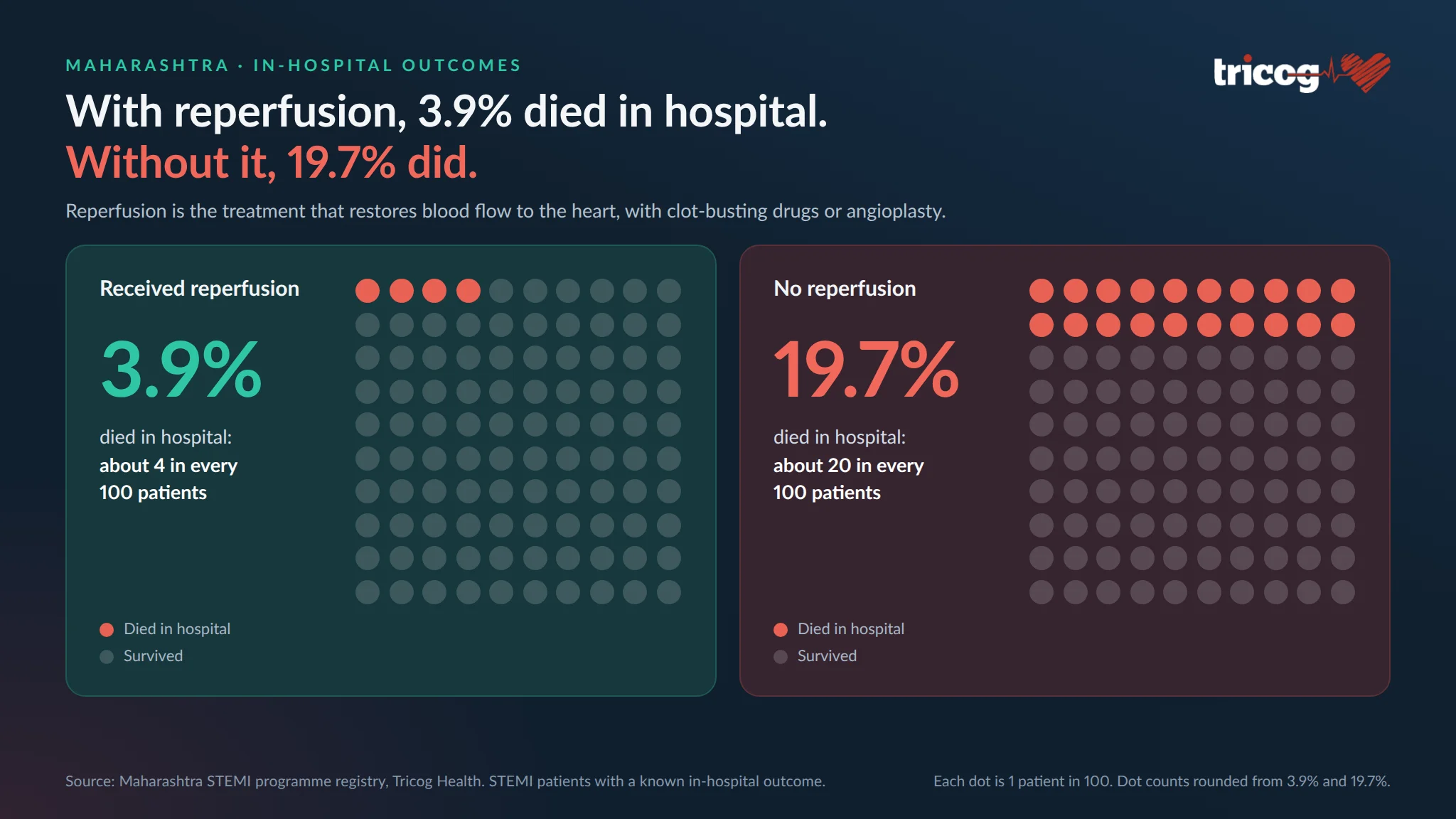
Programme data from Maharashtra also highlights the importance of timely treatment. In-hospital mortality was reported at 3.9% among patients who received reperfusion therapy in time, compared with 19.7% among those who did not.
Odisha has reported an increase in survival among enrolled patients, from 79% in August 2025 to nearly 88% in March 2026. The programme estimates that it is helping save approximately 12 lives a day.
Goa programme demonstrates the potential of decentralised care
Launched in 2019, Goa’s STEMI programme was examined in a review commissioned by the Union Health Ministry and conducted through the Population Research Centre in Dharwad. The assessment reported that treatment was being delivered within approximately 15 minutes, against a 90-minute benchmark used in the review, and highlighted the potential of using existing healthcare infrastructure to expand access to reperfusion treatment.
The programme has recorded more than 460,000 diagnoses and identified over 22,000 major heart attacks, according to programme figures.
The experience across the participating states underscores the importance of connecting early diagnosis with a coordinated treatment pathway. While digital systems can help shorten the time required to identify a heart attack, effective outcomes also depend on trained healthcare workers, ambulance coordination, referral protocols and access to hospitals capable of providing definitive treatment.
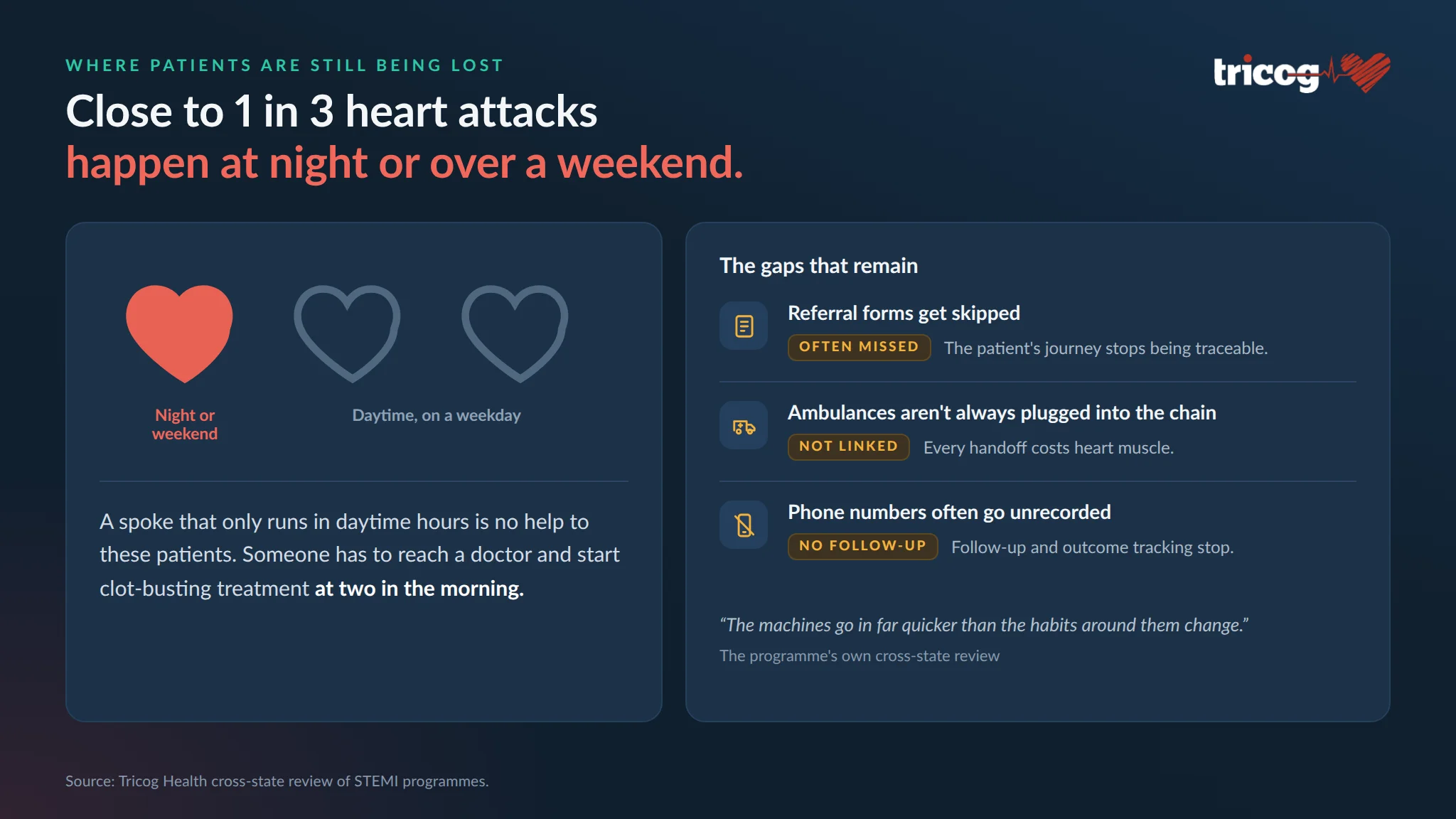
Ensuring round-the-clock service availability remains particularly important, as heart attacks can occur at any time. Incomplete referrals, missing patient information and delays in transfers continue to present challenges for emergency cardiac care.
Strengthening access to cardiac care
Commenting on the programme, Dr Charit Bhograj, Founder and CEO of Tricog Health, said, “A heart attack in a district town should not carry a worse sentence than one in a city. What these seven states have shown is that when the government owns the pathway, and the first ECG is read by a doctor within minutes, survival changes. The technology is ready. The work now is making sure no patient reaches us too late.”
The initiative reflects a broader effort to strengthen cardiovascular care through technology, clinical expertise and public health infrastructure. With cardiovascular disease remaining a major cause of mortality in India, improving access to timely diagnosis and treatment is an important part of reducing preventable deaths.
As the programmes continue to develop, their experience may offer lessons for other regions seeking to improve emergency cardiac care, particularly in areas where specialist services remain difficult to access.
About Tricog Health
Founded in 2014 by interventional cardiologist Dr Charit Bhograj, Tricog Health is an AI-powered cardiac care company combining connected medical technology, artificial intelligence, cloud infrastructure and clinical expertise to support the detection and management of cardiovascular disease.
The company reports that its platforms have screened more than 41 million patients, identified over 500,000 heart attacks and flagged more than 1.5 million critical ECG findings. Its technology supports more than 12,000 customers across 15,000 installations, including hospitals, clinics, diagnostic centres and public health programmes, with collaborations spanning more than 12 countries.

 Continue With Google
Comments (0)