


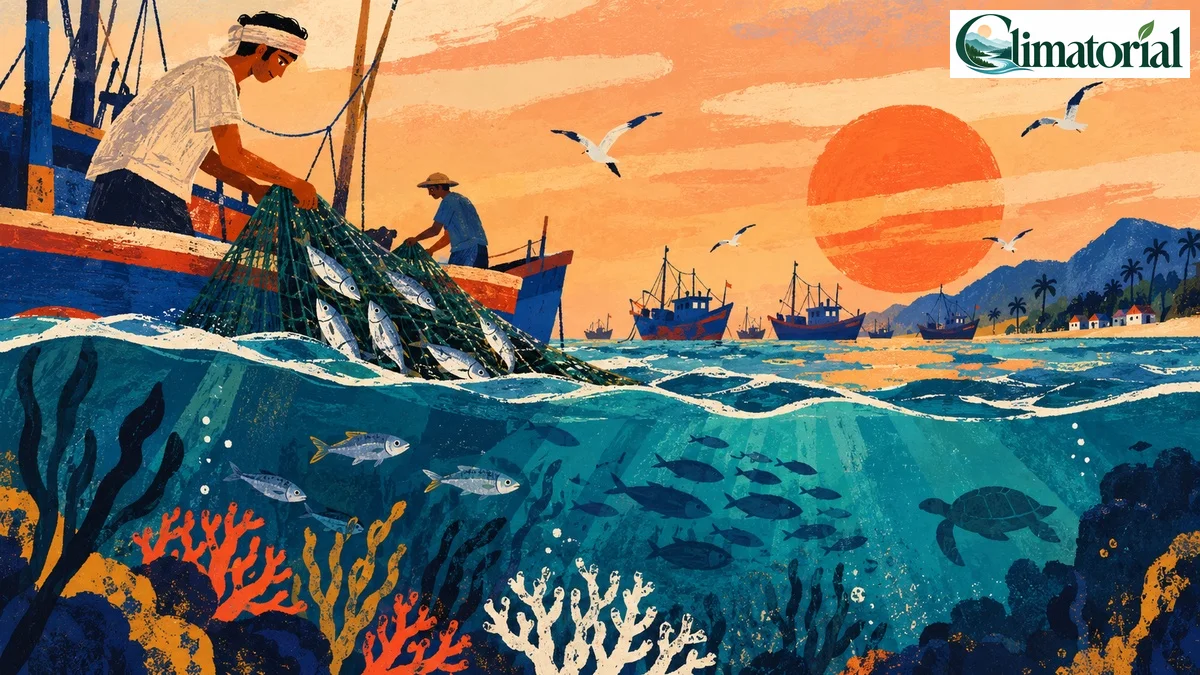
The world’s oceans are entering unprecedented territory. Record-breaking temperatures are not simply an El Niño story; they are a symptom of a much longer process in which human-driven climate change has steadily loaded the ocean with heat.
Human activity, predominantly the burning of fossil fuels, is the main driver of hotter ocean temperatures, with most of the excess heat absorbed by the sea. In the past decade alone, around 104 zettajoules of energy have been added to the ocean, equivalent to about 1.7 billion atomic bombs. The rate of ocean warming over the past 20 years is more than twice that of the previous 40 years.
El Niño is adding to the current extremes. But scientists say its heat is being superimposed on an already warmer ocean. The previous El Niño ended in May 2024, yet sea-surface temperatures remained close to or above previous records through 2025 and into early 2026, including during cooler La Niña conditions.
“The latest data shows that 2026 is already shattering records for ocean heat, and this is only likely to continue into 2027 and well into the future if we do not reduce greenhouse gas emissions,” says Dr Zachary Labe, climate scientist at Climate Central.
The implications reach far beyond the ocean.
The climate’s great heat buffer is under pressure
The ocean has absorbed approximately 93% of the excess heat trapped by the warming atmosphere. It regulates temperatures, weather and rainfall, stores carbon and supports an economy worth nearly $3 trillion a year.
But rapidly warming sea-surface temperatures and a reduction in the ocean’s absorption of CO₂ suggest that this crucial climate buffer is weakening.
The clearest manifestation is the growing intensity of marine heatwaves. They are now 10 times more intense than in pre-industrial times and last about three times longer. Half of the marine heatwaves recorded since 2000 would not have happened without global warming.
For Dr Tom Pickerell, Global Director of the Ocean Program and Head of the Secretariat for the High-Level Panel for a Sustainable Ocean Economy at the World Resources Institute, this is no longer an issue that can be confined to environmental policy.
“We’re on course to reach a hundred days of record-breaking ocean heat, and that should concern every finance minister, not just every environment minister.”
The reason is increasingly apparent: hotter seas are disrupting fisheries and food supplies, damaging reefs and beaches that support tourism, putting pressure on infrastructure and helping fuel extreme weather.
One study cited in the factsheet found that 22% of continental heatwaves and 43% of coastal heatwaves began as marine heatwaves.
Europe: an ocean transformed by heat
The Mediterranean provides a stark example.
About 83% of the Mediterranean is currently under marine heatwave conditions. Over the past 40 years, the sea has gone from experiencing roughly one marine heatwave per year in a discrete area to an average of four annually, covering almost the entire sea.
Marine heatwaves are disrupting ecosystems from the surface down. As waters become too warm, fish move deeper, making them harder for seabirds to reach. Coral populations in the Mediterranean have fallen by 90%, while the noble fan mussel has been pushed towards extinction.
Warmer waters are also increasing the risk of diseases such as vibriosis and contributing to rising jellyfish populations, creating risks for fisheries, aquaculture and coastal tourism.
Professor Serge Planes, CNRS research director and coral reef scientist in French Polynesia, says the increasing frequency and intensity of marine heatwaves are placing coral ecosystems under unprecedented pressure.
“Marine heatwaves are becoming more frequent, more intense and longer-lasting.”
Local conservation can help reefs withstand some of the pressure, he says, but cannot compensate for continued global warming.
The consequences are also being felt on land. The factsheet says marine heatwaves in the North Atlantic and Mediterranean contributed significantly to the devastating Valencia floods in 2024, which killed more than 200 people.
From fishing grounds to supermarket shelves
In Africa, the warming ocean is already affecting food supply chains.
Morocco recorded a 46% decline in sardine landings in 2026, contributing to an export ban on frozen sardines and shortages in European markets. Waters warming beyond sardines’ optimal range were identified as a major factor, alongside overfishing, pollution and higher fuel prices.
In Ghana, rising ocean temperatures and marine heatwaves in the Gulf of Guinea are decimating fisheries.
The impact is particularly serious in countries where fish is central to both nutrition and livelihoods. Marine heatwaves can increase child stunting, wasting and mortality in low- and middle-income countries.
Dr Kathryn Smith of the Marine Biological Association UK describes the economic chain reaction as: “Heatwaves in the ocean can close fisheries through disease, mortality or simply because the fish move to a cooler part of the ocean.”
That movement can mean lost catches, lost income and higher prices.
She adds:
“Extreme ocean temperatures can often lead to loss of industries including aquaculture, fisheries and tourism.”
Peru’s anchovy crisis shows the economic cost
In Peru, El Niño Costero contributed to a 73% year-on-year fall in the fishing sector in May 2026, its worst performance in six years. Fishing-linked manufacturing fell by 42%.
The first anchovy season produced only around 0.5 million tonnes, compared with 1.9 million tonnes the previous year. The 2023 El Niño had already caused an estimated $1.4 billion in losses to Peru’s anchoveta industry.
Those losses can ripple through international markets, affecting the price and availability of fish oil and fishmeal.
Coral reefs are becoming casualties of ocean heat
The Mesoamerican Reef illustrates the ecological cost.
Nearly the entire reef was exposed to serious heat stress in 2023–24, with roughly half its corals severely affected by bleaching. Between 2023 and 2025, the reef lost about half of its living coral, leaving live coral cover at just 17%.
For Professor Planes, reducing local pressures such as pollution and overfishing can improve the resilience of reefs—but the fundamental problem remains global warming.
Dr Melanie McField, executive director of Healthy Reefs for Healthy People, says the damage is now impossible to ignore:
“Our heating oceans are having visible impacts around the world.”
The scale of coral loss is also driving new conversations around the legal protection of marine ecosystems, including the emerging “Reef Rights” movement.
An enormous heatwave across the Pacific
In the Asia-Pacific region, the scale of ocean heat is extraordinary.
The Pacific currently has a marine heatwave roughly the size of North and South America combined, with 86% attributed to climate change.
Australia has experienced permanent losses of kelp forests along hundreds of kilometres of coastline. An ongoing toxic algal bloom in South Australia, partly caused by an immense marine heatwave, has killed fish, sharks, rays and sea dragons and caused health problems for nearby communities.
For countries whose economies depend heavily on the sea, the risks are especially acute. In Kiribati, more than 70% of government revenue comes from tuna fishing licences, leaving the country highly exposed to changes in tuna distribution caused by warming waters.
Hotter oceans, stronger storms
The warming ocean is also changing the behaviour of the atmosphere.
Extreme ocean temperatures have intensified storms including Typhoon Doksuri, Severe Cyclonic Storm Remal and Tropical Cyclone Mocha, which together affected millions of people and caused hundreds of deaths.
Climate change is also forcing whales to alter migration routes into busy commercial shipping lanes, increasing the risk of fatal vessel strikes.
The warning beneath the waves
The ocean has absorbed an extraordinary amount of humanity’s excess heat. But the consequences of that warming are no longer confined to marine ecosystems.
They are appearing in fishing communities, food markets, coral reefs, tourism economies and extreme-weather events.
From Morocco’s sardines to Peru’s anchovies, from the Mediterranean’s collapsing marine ecosystems to the Pacific’s vast heatwave, the message is increasingly consistent: a hotter ocean means a more unstable world.
And as Dr Labe warns, without deep reductions in greenhouse-gas emissions, the record-breaking heat is likely to continue.
The question is no longer whether ocean warming will affect human societies because it has already begun.

 Continue With Google
Comments (0)